
Watch any high-level pickleball match for ten minutes and you’ll notice something: the best players almost never look rushed. They’re rarely stretching awkwardly for balls, rarely off-balance on contact, and rarely reacting — they’re already there. That’s not talent. That’s footwork.
Poor footwork is the hidden force behind most unforced errors. Players blame a bad dink on their paddle, a missed volley on their hands, and a blown third-shot drop on “bad mechanics” — when the real culprit is usually arriving late, off-balance, or from the wrong angle. Fix your feet and a surprising amount of your game fixes itself.
Here’s the complete breakdown of pickleball footwork — the core moves, when to use each, and the mistakes that are quietly costing you points.
The Athletic Ready Position
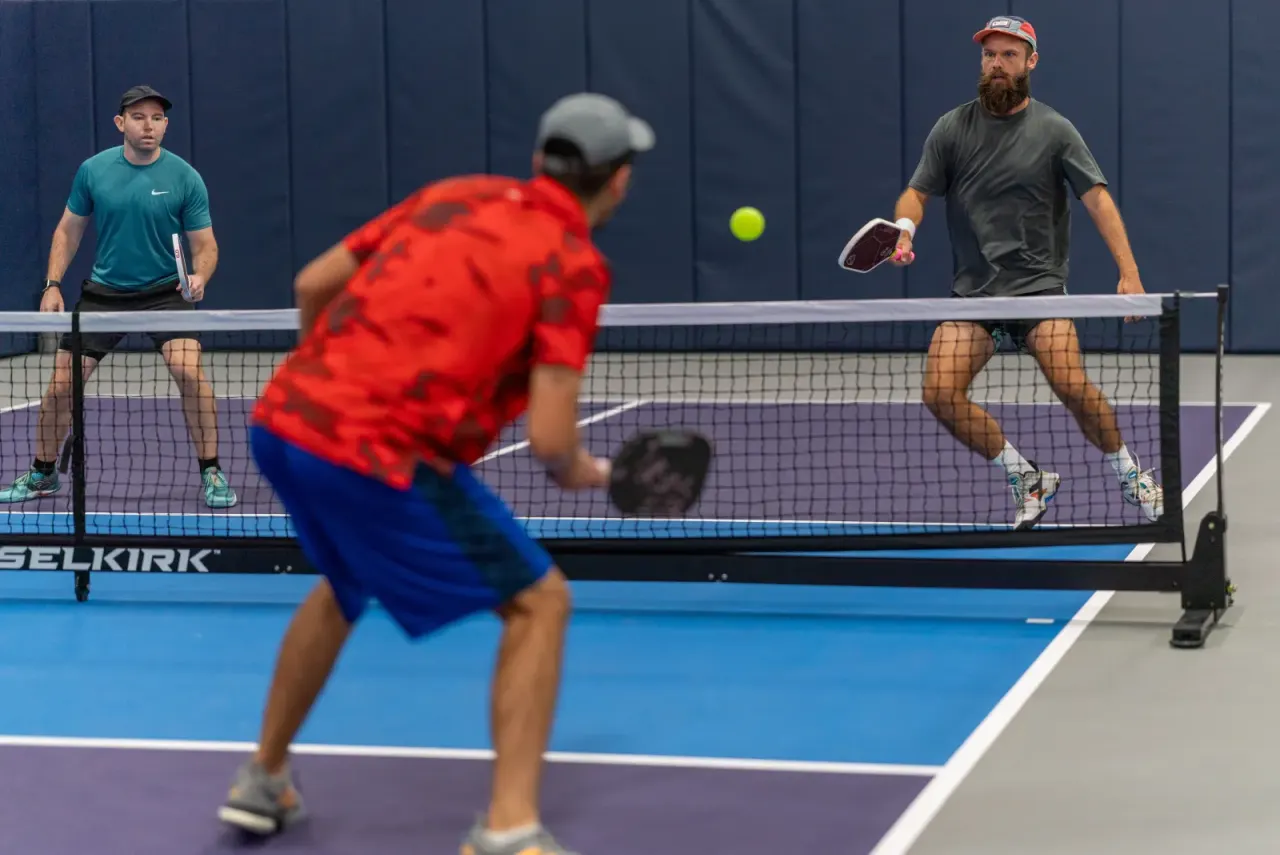
Everything starts from a solid base. Before the point begins, your weight should be on the balls of your feet, knees bent to about 15–20 degrees, feet shoulder-width apart. Spine is slightly forward — not hunched, just tilted with purpose. Paddle is up in front of you, around waist height.
This is your home base. You return to it between shots, and you launch from it at contact. Players who stand flat-footed or lock their knees are constantly one step slow, because they have to break inertia before they can move. The athletic stance keeps you already in motion.
Paddle Position Matters Here Too
A dropped paddle means your first move is always to lift it — which costs you half a step in reaction time. Keeping the paddle face in front and up isn’t just advice about the paddle; it anchors your posture in the ready position.
The Split Step: Your Reaction Launch Pad
The split step is the single most important footwork move in pickleball, and most recreational players never learn it.
Here’s how it works: just before your opponent contacts the ball, you take a small hop — both feet land simultaneously slightly wider than shoulder-width. The moment of landing coincides with the moment they hit. From that two-foot landing, you can instantly push in any direction without a false first step.
Without a split step, you’re standing on one foot or the other, which means half your possible first moves require an inefficient weight transfer. With it, every ball direction is equally reachable.
When to do it: Any time your opponent is about to hit — return of serve, their third shot, their reset, every volley exchange. Good players split step almost constantly during a rally. It becomes automatic with practice.
Common mistake: Hopping too early (before they hit) or too late (after the ball is already coming at you). The timing — land as they contact — is everything.
The Shuffle Step: Your Primary Movement
Once you’ve pushed off from your split step, the shuffle step is how you move — sideways, forward, and diagonally — while staying balanced and ready.
A shuffle is two feet moving together laterally: push off the inside foot, land the outside foot, bring the feet back to shoulder-width, repeat. What you’re not doing is crossing your feet. Crossing feet in a lateral move is one of the most common footwork errors in pickleball, and it leaves you rooted on contact because your feet are tangled.
The shuffle keeps your athletic stance intact while you travel. Your knees stay bent, your weight stays low, and your paddle stays up — you can stop and hit at any point in the shuffle without resetting your whole body.
Key applications of the shuffle:
- Moving laterally along the kitchen line during a dinking exchange
- Adjusting your position as the ball drifts toward a corner
- Moving forward to the transition zone in controlled steps rather than running
Why Crossovers Are Not Always Wrong
Quick clarification: crossover steps (where one foot crosses in front of the other) are useful for covering long distances — like sprinting back for a lob. For those full-court runs, crossing is faster. The rule is: shuffle for short, controlled adjustments; crossover for ground you need to cover fast.
Getting to the Kitchen Line: The Controlled Advance
The most important footwork pattern in pickleball is the transition from the baseline to the non-volley line. This move happens on almost every point, and how you do it matters enormously.
The mistake most players make: they sprint headlong toward the line as fast as possible. This means they arrive with momentum they can’t control, commit to a spot before knowing where the ball is, and often get jammed or caught mid-stride.
The better approach:
- Push forward in shuffle steps, not a flat sprint
- Stop — with a split step — when your opponent hits
- Play the ball from wherever you are if you have to, then advance again
- Get to the kitchen line in 2–3 controlled advances, not one dash
This method — advance, stop, play or advance again — is sometimes called “move, pause, assess.” It keeps you in a position to defend at every stage of your approach.
The No-Man’s Land Problem
The transition zone (between the baseline and the kitchen) is affectionately called no-man’s land. You don’t want to live there — balls bounce at your feet, you can’t volley effectively, and you’re in an awkward defensive crouch. But you do have to travel through it. The goal is to spend as little time in it as possible by moving in bursts rather than inching forward slowly.
The Lunge: Reaching Wide Without Losing Balance
Sometimes the ball goes wide and there’s no time to shuffle — you need to reach it. The lunge is how you do that without face-planting or sailing the return wide.
A proper pickleball lunge:
- Lead with the foot on the side the ball is going (if the ball is to your forehand, step your right foot toward it)
- Keep the trailing leg somewhat bent, not locked straight
- Make contact with your weight balanced between both feet as much as possible
- Push back to center with that trailing leg immediately after contact
The problems come when players reach with their arm before their foot. If your foot is planted and your arm is flying out, you’ve lost your base and your shot will be off. Lead with the step; the arm follows.
Recovery after a lunge: As soon as you make contact, push your weight back toward center using the leg you lunged with. Don’t stand and watch your shot — return to your athletic ready position. This sounds obvious but takes conscious practice because the natural instinct is to linger.
Recovery Footwork: The Step Nobody Practices
The most neglected footwork skill is recovery — getting back to position after you’ve moved to play a ball.
Every shot you hit pulls you somewhere: a lunge to the left, a step back for a drive, a reach into the kitchen for a dink. After that shot, your opponent is immediately sending the next ball, and if you’re still in the “hit” position, you’re out of place.
Recovery steps are simply the movement you make immediately after contact to return to your base position. They’re small, fast, and deliberate:
- After a wide lunge: push back to center with 1–2 quick steps
- After stepping forward for a volley: back off the line slightly to recover your space
- After driving from the baseline: shuffle to mid-court and split
Building recovery into your game is partly about mechanics and partly about mindset. You have to accept that the point is not over when you hit the ball, which means your movement is also not over.
Common Pickleball Footwork Mistakes
These are the footwork errors that come up most often for developing players:
1. Backpedaling on lobs. When a lob goes over your head, the natural instinct is to run backward. This is one of the least athletic movements a human can make and leads to poor shots and injuries. Instead, turn and run with the ball over your shoulder — a crossover start, facing the direction you’re running. Get behind the ball, then set up facing the net.
2. Flat feet. Standing on your heels makes you slow. The ball of your foot is where your weight should live during a rally. If you notice yourself dropping onto your heels, consciously raise your heels a bit and feel the difference in how quickly you can move.
3. No split step on return of serve. The serve is the most predictable ball in pickleball — you know it’s coming, you have time. Failing to split step before the return is a missed opportunity to guarantee you’re in position.
4. Freezing after contact. Hitting the ball and then watching it is natural. Fixing it requires building the habit of moving immediately after contact, even before you know where the ball is going.
5. Wide stance that won’t shuffle. Planting your feet too wide to stay low makes you stable but immobile. There’s a difference between bent-knee ready and locked-in defensive crouch. You want the former.
How to Practice Your Footwork
Most players improve their footwork indirectly by playing more — and that works, eventually. But deliberate footwork practice accelerates it dramatically.
Shadowing drills: Without a ball, practice split step, shuffle, and recovery patterns on a court. A coach or partner calls directions and you react. This isolates the movement from the shot decision, which is where real footwork grooves in.
Ball machine work: A ball machine set to random placement at medium speed forces you to move before you think. Available at Pickleland for $15/hr — one of the best footwork tools available because it’s predictably relentless.
Focus games: In your next few open play sessions, pick one footwork element to watch — just the split step, or just your recovery. Don’t try to fix everything at once. Narrow focus speeds up the learning.
Video yourself: Footwork flaws are almost impossible to feel in real time. A one-minute video of you at the kitchen line will show you things that ten hours of play wouldn’t reveal on its own.
How Much Footwork Improvement Can You Expect?
The honest answer: quite a lot, faster than most players expect. Unlike timing a hard drive or developing a consistent third-shot drop, footwork is mostly about habit formation. Once you’ve grooved the split step and the shuffle, they happen below conscious thought — and the game slows down noticeably because you’re no longer scrambling.
Most players who deliberately work on their footwork for two to three weeks notice measurable improvement in how often they’re in position to make their preferred shot, rather than having to improvise from a bad position.
Get Your Footwork Dialed In at Pickleland
There are things you can fix watching video. There are things you can fix reading posts like this one. Footwork habits — especially the split step timing — benefit enormously from having a coach watch you live and call it out in real time.
At Pickleland (9 indoor courts at 21427 Martin Ln, Pflugerville), our coaches run group clinics ($30–$60) and private lessons ($80–$150/hr) that routinely include footwork as a core component — because it underlies every other skill. Members also get free morning drills where footwork patterns are a recurring focus. See memberships or book a clinic to get started.
Frequently Asked Questions
What is the most important footwork skill in pickleball?
The split step. It’s the foundational move that makes every other movement faster by giving you an equal launch point in any direction. If you only add one footwork habit, make it the split step timed to your opponent’s contact.
How do I stop getting caught flat-footed in pickleball?
Two things: first, shift your weight to the balls of your feet and keep your knees slightly bent at all times during a rally. Second, practice the split step until it’s automatic — flat-footedness often means you skipped the split, so you’re reacting from a standing position rather than a loaded one.
Should I shuffle or run in pickleball?
Shuffle for short lateral adjustments and controlled forward movement, especially near the kitchen. Run (crossover steps) when you need to cover significant ground fast — chasing a lob, recovering from a wide ball. Most kitchen-line footwork should be shuffling; baseline coverage is where running comes in.
How do I recover after hitting a wide ball?
Push off the foot you lunged with immediately after contact. One or two quick steps back toward center, then split and reset. The key is making recovery a habit that starts the instant you make contact — don’t watch the ball first.
How can I improve my pickleball footwork fast?
Add shadowing drills (moving without a ball) and deliberate recovery practice to your sessions. One hour of focused footwork drill work accelerates improvement faster than ten hours of casual open play, because you’re isolating the habit from the noise of real gameplay. Working with a coach who can spot your specific pattern and correct it in real time is the fastest route.